Thread the Needle · Explainer
Canadian-Owned vs. Canadian-Made: What's the Difference?
“Proudly Canadian” can mean several different things. A company can be Canadian-owned, founded in Canada, designed in Canada — or it can actually manufacture the garment here. Those claims can overlap, but they are not interchangeable.
If supporting Canadian manufacturing is important to you, the most useful question isn’t “Is this a Canadian brand?” It’s “Where was this garment actually made?”
Maple leaves show up on plenty of clothing labels. So do phrases like “Canadian company,” “designed in Canada,” and “proudly Canadian.”
None of those statements is necessarily misleading. They simply describe different parts of the business.
A company can be headquartered in Canada, employ Canadians and be owned by Canadians while having its garments manufactured somewhere else. That is a common model in the apparel industry.
A garment that is actually made in Canada is a different claim. It speaks to where the manufacturing work happened.
What does Canadian-owned mean?
Canadian-owned
The company or brand is owned or operated from Canada. Its head office, design team or leadership may be Canadian, while manufacturing can take place elsewhere.
Made in Canada
The claim refers to the garment itself and where its manufacturing took place. It is a product claim, not simply a statement about who owns the brand.
Both can be meaningful. Buying from a Canadian-owned company can support Canadian jobs in areas such as retail, design, marketing, logistics and administration.
Buying a garment manufactured in Canada also supports domestic manufacturing work.
The distinction matters because many shoppers understandably read “Canadian” as meaning the product itself was made here, even when the label is really describing the company behind it.
Look for the place, not just the flag
If you want to know where a piece of clothing was actually made, look past the maple leaf.
Specific language is more useful than general branding.
Look for statements such as “Made in Canada,” a specific manufacturing location, or clear country-of-origin information on the product page or garment label.
Phrases such as “Canadian brand,” “Canadian-owned,” “founded in Canada,” or “designed in Canada” tell you something about the company, but they do not necessarily tell you where the garment was manufactured.
That doesn’t make one claim better or worse than another. It simply gives you the information you need to decide what matters to you.
Where Stanfield's fits
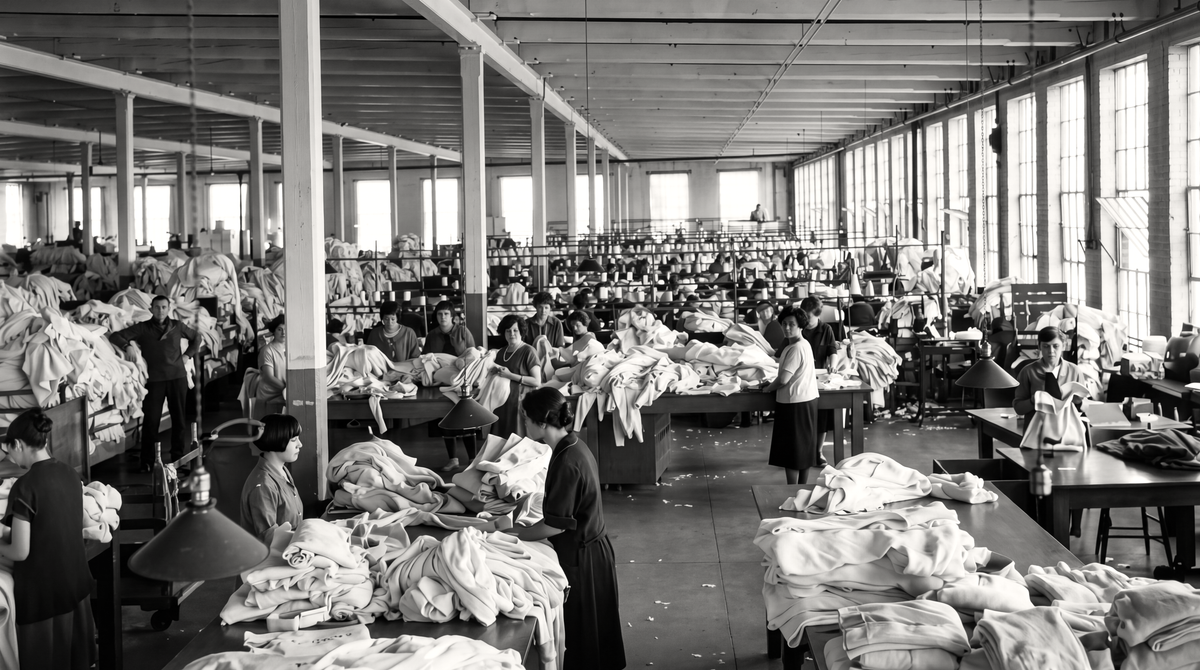
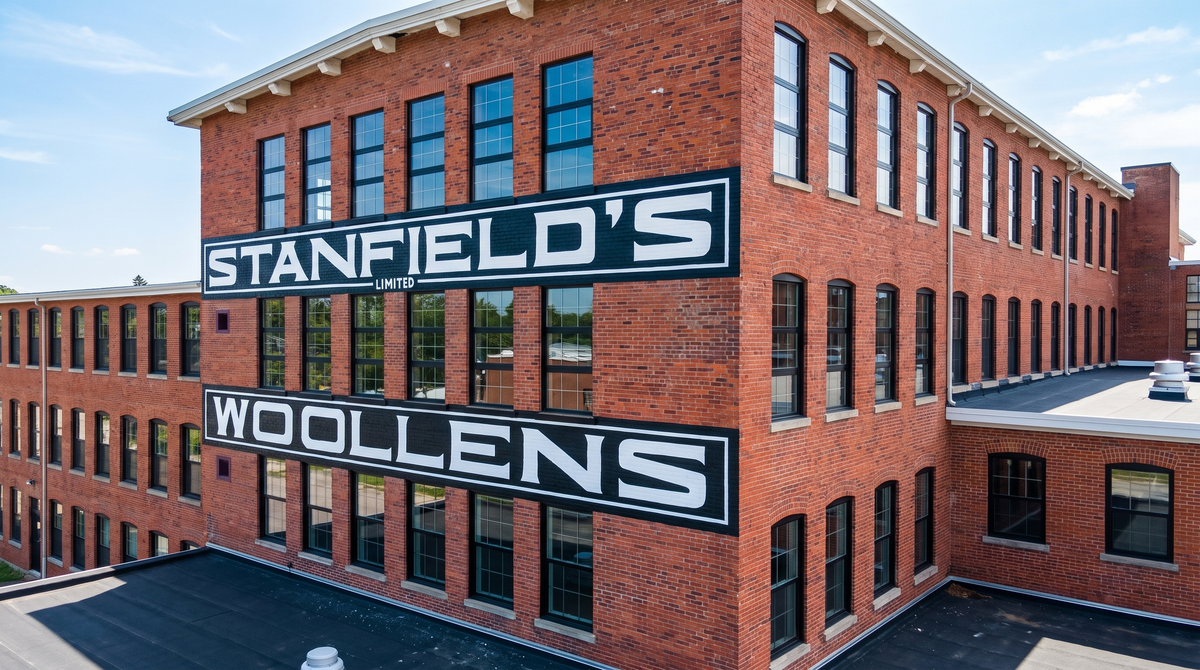
Stanfield’s has a long manufacturing history in Truro, Nova Scotia. Today, the Made in Canada assortment includes base-layer tops and bottoms, underwear, henleys, sweaters, onesies, socks and other garments. :contentReference[oaicite:1]{index=1}
The current Made in Canada collection also spans a wide range of fabrics, including cotton, wool, merino, nylon, polyester, modal and several other blends and constructions. :contentReference[oaicite:2]{index=2}
Not every product Stanfield’s sells should be assumed to be made in Canada. That is why the distinction belongs at the product level.
The pieces identified as Made in Canada are the ones customers should rely on when Canadian manufacturing is specifically what they are looking for.
Read the product page before the brand story.
A company’s heritage can tell you where it comes from. The product page should tell you where the garment comes from.
That is the difference between brand identity and manufacturing origin.
Why the distinction matters
Shoppers buy Canadian for different reasons.
Some want to support a Canadian company. Others specifically want to support manufacturing jobs in Canada. Some care about shorter supply chains, local production knowledge or simply knowing where something was made.
Those are different goals, so they require different information.
If your goal is to support Canadian ownership, look at the company.
If your goal is to support Canadian manufacturing, look at the garment.
The shortest version
Canadian-owned tells you something about who runs the business.
Made in Canada tells you something about where the product was manufactured.
Both can be worth supporting. They just shouldn’t be treated as the same claim.
Made in Canada
See the garments we identify as Made in Canada
Explore Stanfield’s current Made in Canada collection and check the individual product pages for details.
See the Made in Canada Lineup